


In short: a well-protected POS system ensures not only secure payments but also trust, continuity, and reputation.
By Eduard Bardají on Dec 3, 2025, 8:48:04 AM
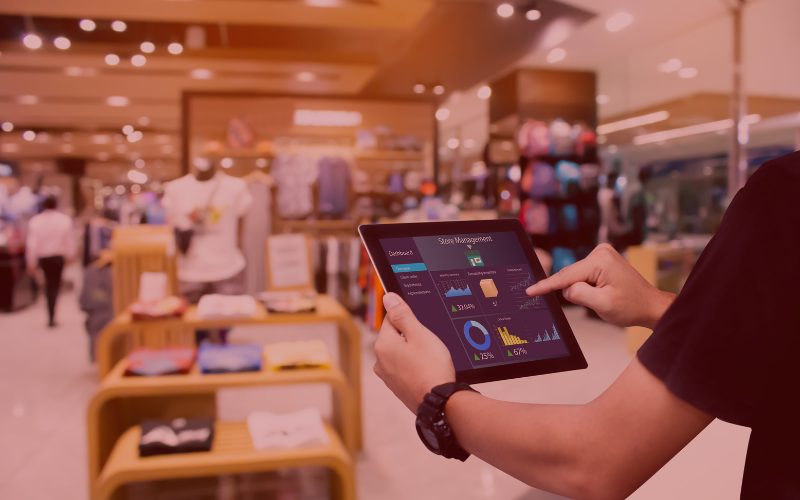
When we talk about point-of-sale (POS) systems, we’re referring to the hardware and software that allow card payments to be processed in shops, stores, restaurants, and similar businesses. These systems handle highly sensitive information, such as card data (magnetic stripe or chip), the cardholder’s details, and transaction information. This makes POS systems a very attractive target for cybercriminals.
Two of the main threats to these systems are:
- Malware specifically designed for POS, such as BlackPOS (and other variants), which infects systems and steals card data during transactions using techniques like RAM scraping, that is, capturing information while it is momentarily stored in the terminal’s memory before being sent to the payment processor.
- Skimming, either physical, through the installation of fraudulent devices or external readers attached to the POS, or logical, through software that captures card data. In both cases, the goal is to extract information that can later be used for cloning or fraud.
Protecting a POS system means defending it both from software-based threats and from physical tampering or a combination of the two.

Risks and consequences of a POS Attack
The impact of a successful attack on a point-of-sale system can have major consequences for a business. First, there is a direct financial risk: stolen data can be used for card cloning, fraudulent purchases, or even sold on underground markets. Historically, this type of attack has been one of the main sources of large-scale card-data theft.
Beyond economic loss, reputational damage is also a factor: customers expect their banking data to be handled securely. If a business suffers an incident, it may lose customer trust permanently.
There is also the issue of service disruption. If an attack blocks or disables POS terminals, business operations may grind to a halt, causing losses from delayed or uncompleted sales and significant operational complications.
Lastly, we must not overlook the legal or regulatory impact: handling sensitive data requires meeting security standards, and a failure to do so could lead to penalties or liability for non-compliance, depending on the country and applicable legislation.
How to protect a point-of-sale system
Protecting a POS against malware and skimming requires a holistic approach, combining technological, operational, and physical measures. Below are some essential defense actions.
Software and network security
One of the first lines of defense is ensuring that the POS software is kept permanently up to date. Updates patch vulnerabilities that attackers could exploit. It’s essential to keep not only the payment application updated, but also the operating system, drivers, and firmware.
Alongside this, installing anti-malware or antivirus software suitable for POS environments, with regular scans, is advisable. This helps detect and neutralize threats before they can capture sensitive data.
The network on which the POS operates should be clearly segmented and protected: ideally, payment systems should not share a network with customer networks (public Wi-Fi, guest networks, etc.), and firewalls or traffic-control systems should be used to block unauthorized access.
To maximize payment-data security, transactions should use end-to-end encryption (E2EE), or tokenization when possible. This means card data is converted into unrecognizable tokens, dramatically reducing its value to a hacker even if intercepted.
It is also crucial to restrict system access privileges. Not all personnel need the same permissions: roles should be assigned according to function, administrative access should be limited, and all important connections and operations should be logged.
Physical security of terminals and skimming prevention
The physical component is just as important as the digital one. Payment terminals should be securely mounted, ideally on bases or stands with anchoring mechanisms, to prevent them from being easily tampered with or swapped without detection.
Regular device inspections are recommended: checking for loose parts, unusual connections, new stickers or adhesives, changes in component thickness, bulging keypads, and other signs of tampering. Some practices include the use of security seals that show evidence of interference if someone tries to open the casing.
It is also useful to restrict physical access to terminals: only authorized personnel should be able to handle or move the equipment. Complementing this with surveillance (security cameras) in payment areas can deter physical skimming attempts or the installation of fraudulent devices.
Finally, updating physical readers is key: if magnetic-stripe readers are still in use, businesses should migrate as soon as possible to chip readers (EMV cards) or, better yet, to contactless or NFC payments. Modern chip and contactless technologies make extracting useful data for cloning significantly more difficult.
Internal policies, training and operational best practices
Technology and hardware aren’t enough. Personnel who operate the POS (cashiers, supervisors, managers, etc.) must be trained in security. Awareness of risks, phishing, physical tampering, and negligence is essential.
Clear policies should be defined: strong, unique passwords; regular password changes; the use of multi-factor authentication (MFA) when supported; and strict control over who has access to sensitive functions.
Keeping logs and conducting regular audits is also recommended. Reviewing access logs, transactions, failed transactions, administrative access, and any anomalies enables early detection of attack patterns or suspicious behavior.
Additionally, having an incident-response plan is important: in case of suspected breach or tampering, personnel must know how to act, how to isolate the POS, how to notify the provider, how to verify system integrity, and how to inform customers if necessary. While not all guidelines specify this explicitly, it follows the comprehensive-security approach recommended by experts.
Advantages of a comprehensive POS security approach
Implementing the measures above not only reduces risks but also offers multiple short- and long-term strategic benefits.
First, it improves customer trust: a business that communicates and demonstrates that it secures its payment systems creates a perception of professionalism and safety. This trust can translate into loyalty, repeat business, and referrals.
Second, it protects the business’s assets, not just cash on hand, but its reputation, operational continuity, and credibility with partners, suppliers, and financial institutions. A breach can have severe consequences, not only financial but reputational.
Implementing good security practices also makes regulatory and compliance requirements easier to meet, for example by complying with payment-industry security standards. This can reduce legal risks or penalties in case of an incident.
A well-secured system also helps prevent operational disruptions: by minimizing the likelihood of successful attacks, it reduces the chance of system outages, connectivity losses, large-scale fraud, or the need for data restoration, thereby providing business stability.
Finally, fostering a culture of security, staff training, and consistent internal controls strengthens business resilience. This not only protects the present but prepares the business to respond effectively to new threats and changes in the cybersecurity landscape.
Protecting point-of-sale systems against malware and skimming should not be considered an optional add-on or luxury for businesses, it is an absolute necessity in a context where card payments are the norm and attackers increasingly use more sophisticated, cheaper, and more automated techniques.
An effective approach requires combining layers of technical (software, network, encryption), physical (hardware, inspection, surveillance), operational (access control, policies, training), and organizational (audits, incident response, security culture) security.
For any business, investing in these measures is an investment in credibility, resilience, and long-term viability. Implementation costs are generally very low compared to the risks and potential losses an attack could cause, and increasingly, consumers value security and trust just as much as price or service quality.
Share this
Previous story
← The danger of not updating systems in laboratories
Security Policies to enforce best practices in corporate social media

Security Policies to enforce best practices in corporate social media
Feb 14, 2025, 11:46:34 AM
3
min read
Security breaches in hospitals and the healthcare sector

Security breaches in hospitals and the healthcare sector
Jun 19, 2023, 11:00:00 AM
3
min read
Problems with the computer that may indicate a cyber attack

Problems with the computer that may indicate a cyber attack
Jun 18, 2024, 7:54:19 AM
2
min read
.png?width=262&height=150&name=accio-10-negre%20(1).png)


.jpg?width=1150&height=64&name=ADHESIVO%20P%C3%81GINA%20WEB%20(1).jpg)