

By Eduard Bardají on Apr 13, 2026, 9:30:00 AM
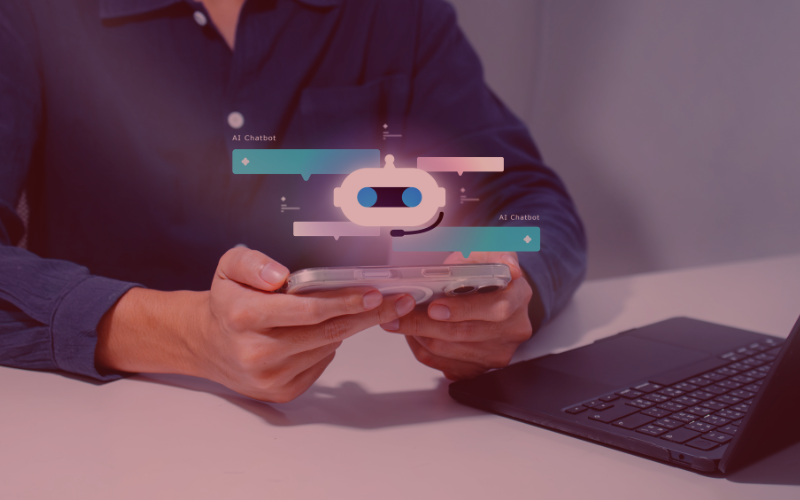
It is estimated that over 60% of financial companies already use chatbots, and adoption in digital fintech platforms exceeds 70%. This means that a large part of customer interactions already goes through automated systems that handle sensitive data in real time.

What is a fintech chatbot
A fintech chatbot is an automated system that interacts with customers to provide information, answer questions, or execute financial operations. It’s not limited to basic support: it handles inquiries about accounts, payments, investments, and other critical services in real time.
These systems allow scaling customer service without losing efficiency, but they also manage sensitive data, making proper implementation and protection essential for the company’s cybersecurity.
What data does a fintech chatbot expose
A fintech chatbot handles critical information from the very first interaction. It not only collects personal data but also accesses accounts, transactions, credentials, and authentication processes.
This makes it a high-risk asset within the architecture. Poor chatbot management doesn’t just affect user experience; it can expose enough information for fraud, impersonation, or unauthorized access.
Risks of not protecting chatbots
Data leaks due to misconfiguration
One of the most common issues is storing conversations or data without encryption or access control. This allows any internal or external failure to result in exposure of sensitive information.
A sophisticated attack is not necessary. A misconfigured server or an exposed API can be enough to compromise financial data.
Chatbot manipulation (prompt injection)
An unprotected chatbot can be manipulated by users. Malicious inputs can force incorrect responses or access information that shouldn’t be shown, affecting both system reliability and data security.
Using AI without data control
Integrating chatbots with AI models without isolating information is a direct risk. Many companies don’t control where the data is processed or how it is used, which can lead to unwanted exposures and compliance issues.
How to protect data in fintech chatbots
End-to-end data encryption
It’s not enough to protect part of the process: data must be encrypted both in transit and at rest. Strong encryption ensures that information remains unreadable even if intercepted.
Implementing secure protocols from the start reduces the risk of financial data exposure and guarantees that customer information is protected at all times.
Access control and authentication
Limiting who can access what information is key in any fintech chatbot. Defining roles and permissions prevents unnecessary access to sensitive data and reduces internal risk.
Applying robust authentication, especially for critical operations, protects accounts and prevents impersonation that could lead to fraud or data loss.
Secure architecture and isolated environments
Separating systems and isolating critical data prevents a failure from affecting the entire infrastructure. A chatbot should have controlled access, not full access.
Designing segmented environments helps contain incidents and protect key assets even if part of the system is compromised.
Use of verified information
Do not let the chatbot improvise in financial processes. Connecting the system to verified sources ensures accurate responses aligned with business reality.
Limiting free generation reduces errors, prevents misinformation, and protects both the client and the company from incorrect decisions.
Continuous monitoring
Deploying the chatbot is not enough: it must be monitored. Detecting abnormal behavior or manipulation attempts in real time allows action before problems escalate.
Proactive cybersecurity for fintech
Protecting data in chatbots is not optional: it’s essential to ensure trust, comply with regulations, and avoid serious impacts on your company. Implementing encryption, access control, isolated environments, and continuous monitoring allows your fintech to maintain operations, security, and reputation intact.
How to Implement the National Security Framework (ENS) Step by Step in an Organization

Cyberattack contingency plan: the minimum required for an ISO 27001/NIS2 audit

.png?width=262&height=150&name=accio-10-negre%20(1).png)


.jpg?width=1150&height=64&name=ADHESIVO%20P%C3%81GINA%20WEB%20(1).jpg)