


By ESED - It & CyberSecurity on Jan 15, 2026, 12:00:01 PM
In 2025, organizations faced an unprecedented increase in digital attacks, from AI-powered phishing to supply chain breaches. These incidents not only compromise data and operations but also affect reputation and business continuity, regardless of company size.
Next, we review the main threats that defined 2025.

Supply chain cyberattacks
In 2025, attackers exploited vendors, third-party software, and cloud services to infiltrate organizations without attacking them directly. These attacks doubled compared to 2024, with cases like Oracle Cloud exposing 6 million records. The lack of third-party visibility and the increasing sophistication of attackers make supply chain security a critical priority.
These attacks are often more costly and prolonged than conventional incidents, with average global costs exceeding $4.4 million. Organizations are implementing SBOMs, dependency audits, and security clauses in contracts to reduce risks and increase supply chain resilience.
DDoS attacks
Distributed Denial of Service (DDoS) attacks increased in frequency and scale. Cloudflare blocked more than 20 million attempts in the first quarter, including flows up to 7 Tbps. Both small businesses and large critical infrastructures were affected, making DDoS protection a strategic cybersecurity element.
In addition to immediate disruption, DDoS attacks can serve as a distraction for simultaneous ransomware or data exfiltration attacks. Organizations therefore combine automated mitigation with continuous monitoring and rapid response plans.
IoT threats
With 18 billion connected devices, IoT attacks surged. Botnets, ransomware, and vulnerability exploitation caused an average downtime of 6.5 hours per incident and significant losses in critical sectors. Mitigation requires constant updates, network segmentation, and staff training.
The increase in connected devices also expands the attack surface. Implementing restricted access policies and integrating advanced monitoring solutions is essential to protect infrastructures and users.
Phishing and ransomware
AI-powered phishing grew 466% in Spain, particularly affecting credentials and sensitive data. Ransomware increased 116%, with double extortion and automated attacks, especially targeting SMEs and critical services. Awareness, isolated backups, and strong authentication are key to reducing risks.
These attacks impact not only finances but also reputation and operational continuity. Implementing phishing simulations and rapid response protocols helps minimize exposure time and damage from incidents.

Want to learn more?
At ESED, we have prepared a complete report on 2025 cyberattacks, with detailed analysis, figures, and defense strategies tailored for businesses. Access the full report here and prepare your organization against the most relevant threats.
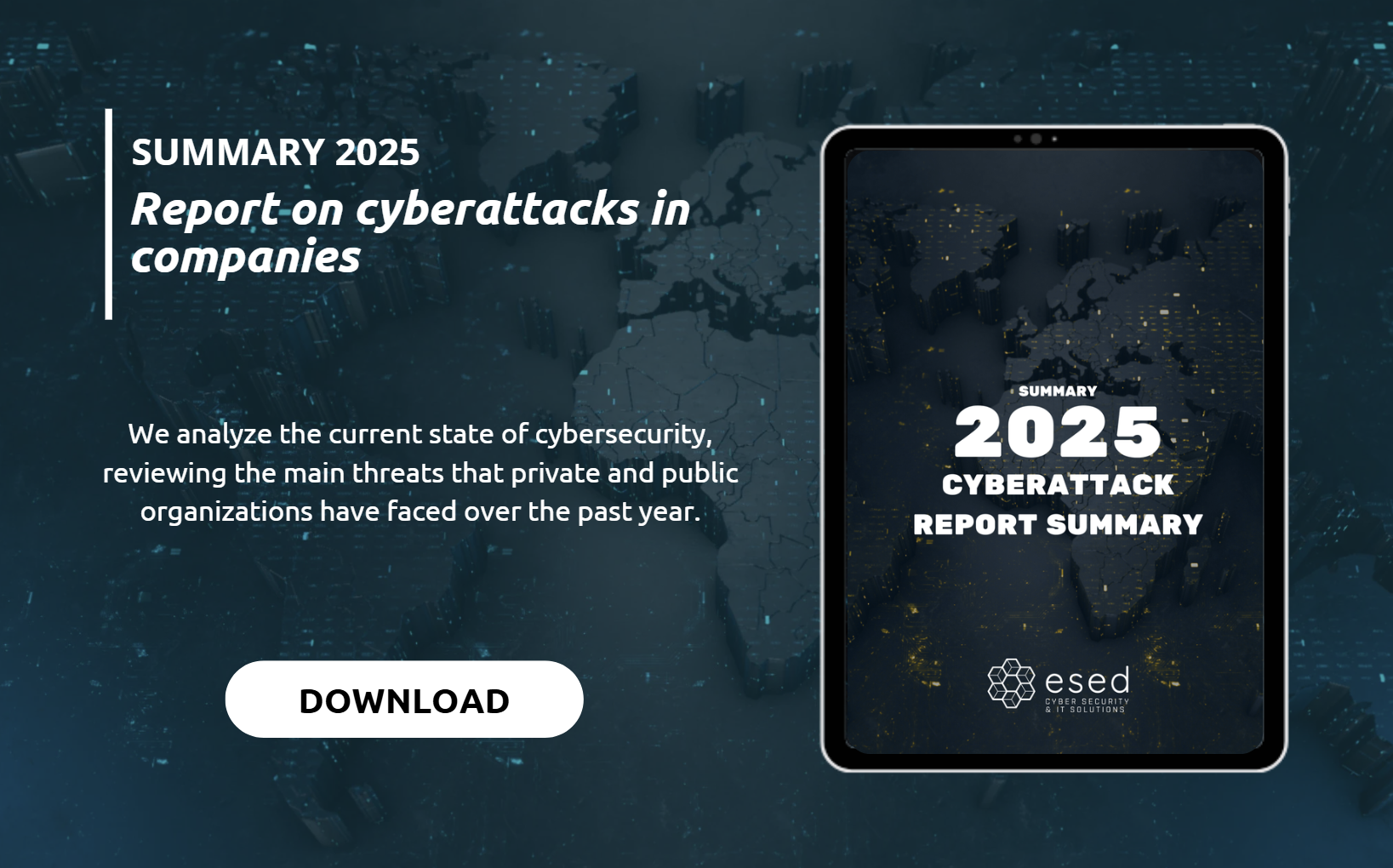

Summary: Overview of cyberattacks 2024-2025
Cybersecurity trends for 2027: which risks will force businesses in Spain to invest?
.png?width=262&height=150&name=accio-10-negre%20(1).png)


.jpg?width=1150&height=64&name=ADHESIVO%20P%C3%81GINA%20WEB%20(1).jpg)