By Eduard Bardaji on Nov 2, 2026, 9:00:00 AM
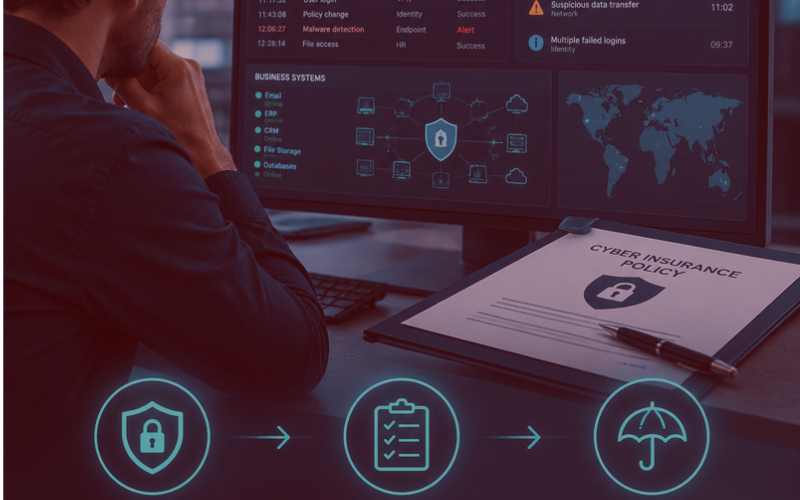
Cyber insurance can help cover the costs of a cyberattack, from business interruption to system recovery. However, purchasing a policy does not guarantee compensation.
If a company fails to meet the policy requirements, reports security measures that are not actually in place, or fails to report an incident as required, the insurer may question whether the claim is covered.
That is why it is important to verify that the required security measures are operational and that the company can provide evidence of their implementation.

Why might an insurer deny a cyber insurance claim?
After an incident, the insurer may investigate how it occurred, what damage it caused, and whether the policy requirements were met. To do so, the insurer may bring in specialists to analyze the systems and activity logs.
Problems often arise when the security measures reported during the application process do not match those actually implemented, or when the company fails to meet the policy's security and incident reporting requirements. The decision will depend on the circumstances and the specific policy terms.
5 reasons why cyber insurance may not cover an incident
1. Multi-factor authentication (MFA) is not enabled
Some policies require MFA for specific types of access. Enabling it for email does not necessarily mean it is also enabled for remote access, administrator accounts, or cloud services.
If a company states that it meets this requirement but still allows access using only a password, the discrepancy may affect coverage.
2. Known vulnerabilities have not been addressed
Unpatched systems can make it easier for cybercriminals to gain access. If a known vulnerability is exploited to compromise the infrastructure, the insurer may review whether the company met the policy's maintenance and security requirements.
Maintaining a system inventory, prioritizing vulnerabilities, and documenting remediation efforts helps manage these risks.
3. Backups cannot restore business operations
Having backups does not guarantee that a company can resume operations after a ransomware attack. If backups are also encrypted, deleted, or unusable, the disruption may last longer.
Protect backups against unauthorized access and regularly verify that data can be restored. Also, review the specific requirements set out in the policy.

4. State-sponsored cyberattacks
Some policies include exclusions for certain state-sponsored cyberattacks or attacks linked to international conflicts. The scope of these exclusions depends on the policy wording and the circumstances of the incident.
Before purchasing a policy, review these exclusions and the conditions that determine whether an attack is covered.
5. Delaying incident reporting or paying a ransom without following the agreed procedure
Policies may establish specific deadlines and channels for reporting an incident. Delaying notification may create coverage issues, depending on the policy terms.
Before negotiating or paying a ransom, consult the procedure established by the insurer and assess the legal implications.
What does an insurer review after a cyberattack?
To assess an incident, specialists may request evidence that helps reconstruct what happened and verify which security measures were in place.
Key evidence may include:
- Activity logs: Access records and events recorded by servers and firewalls.
- System inventory: Affected devices and the security measures implemented.
- Patch history: Identified vulnerabilities and the remediation steps taken.
- Recovery test results: Records of backup restoration tests.
Keeping this evidence helps the insurer investigate the incident and allows the company to demonstrate which controls were operational before the attack. Missing evidence can complicate the claim assessment.
How to prepare your business to meet cyber insurance requirements
To reduce the risk of discrepancies with the insurer, your technical security measures must match the information provided in the insurance application and the policy requirements.
Review the application before purchasing or renewing a policy
Verify the answers with your IT and cybersecurity teams. Having a security tool under contract is not enough: you must confirm that it is deployed wherever needed and working correctly.
Enable MFA and address vulnerabilities
Review remote access, privileged accounts, and cloud services. Maintain a vulnerability management process that prioritizes remediation and documents the actions taken.
Protect and test your backups
Isolate backups where appropriate, restrict who can modify them, and verify that systems can be restored. Determine which services must be recovered first and how long the business can afford to operate without them.
Monitor systems and prepare an incident response plan
Detection and response tools, such as EDR/XDR, help identify suspicious activity and contain incidents. They should be integrated into a procedure that defines who responds, how incidents are escalated, and how evidence is preserved.
Establish an incident reporting procedure with your insurer
Identify the phone numbers, reporting channels, and deadlines specified in the policy. Make it clear who is responsible for reporting an incident and what steps must be followed before hiring emergency response services or making decisions about a potential ransom payment.
How ESED can help improve your company's cybersecurity
Cyber insurance can help cover certain losses, but it does not replace the security measures needed to prevent incidents, reduce their impact, and restore business operations.
At ESED, we help businesses strengthen their security controls through cybersecurity audits, vulnerability management, 24/7 monitoring, managed detection and response (MDR/XDR), and backup protection. Our managed services come with a fixed monthly fee, with no unexpected costs.