

By Esteban Sardanyés on Nov 25, 2025, 9:09:58 AM
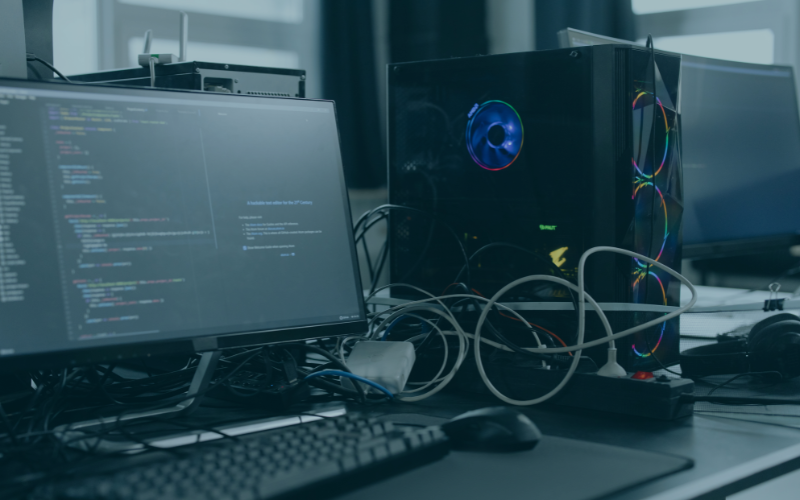
In 2027, IT departments will have to manage increasingly distributed, automated infrastructures connected to artificial intelligence tools. The challenge will no longer be limited to digitizing processes, but to ensuring that technology is scalable, secure, and capable of responding to changing business needs.
The arrival of agentic AI, artificial intelligence systems capable of making decisions and executing tasks autonomously based on defined objectives, the growth of infrastructure designed for AI workloads, and the evolution of cloud services will require organizations to rethink how IT systems are managed.
At the same time, cybersecurity and business continuity will remain inseparable elements of any technology strategy.

Technology Trends for IT Departments
Hybrid, Distributed, and AI-Ready IT Infrastructure
In 2027, IT infrastructures will be even more hybrid and distributed than in 2026. On-premises servers, cloud services, SaaS applications, edge computing, and infrastructure specifically designed for artificial intelligence will coexist within the same organization.
The challenge will no longer be simply deciding where to host each system, but managing all these environments in a coordinated way. Data location, performance, costs, security, and digital sovereignty requirements will carry increasing weight when designing an infrastructure.
In addition, the growth of AI workloads is driving new investments in IaaS (Infrastructure as a Service) and specialized infrastructure. Companies will need to adapt their systems to support these workloads without losing control over their data or unnecessarily increasing their complexity.

Automation, AIOps, and Agentic AI
Automation will continue to evolve in 2027. AIOps (Artificial Intelligence for IT Operations) will enable organizations to analyze data from systems, networks, and applications to identify patterns and incidents. The next step will be integrating AI agents capable of autonomously executing certain tasks within IT processes.
This will make it possible to automate everything from incident detection and classification to specific support, maintenance, and optimization tasks. However, automation will not eliminate the need for human oversight: organizations will need to define what each agent can do, what information it can access, and which actions require human intervention.
IT departments will progressively move from managing repetitive tasks to overseeing automated processes, designing workflows, and controlling the operation of increasingly autonomous systems.
24/7 Managed IT Services
The outsourcing of IT services will continue to gain traction in 2027, not only as a useful resource, but as an efficient way to have access to an expert team around the clock. Companies will look for providers capable of delivering continuous support, automation, infrastructure management, access control, maintenance, and security through an integrated approach.
This model allows organizations to reduce risks, optimize costs, and scale without having to expand their internal IT department. The key will be having unified management that combines real-time monitoring, immediate incident resolution, and continuous infrastructure oversight.
Zero Trust Security and Identity Protection
In 2027, Zero Trust will continue to establish itself as a reference model for protecting distributed infrastructures.
The growth of remote work, cloud services, SaaS applications, and AI agents makes identity even more important. The focus is no longer only on controlling which systems employees can access, but also which applications, devices, and agents can access information and what actions they are allowed to perform.
Multifactor authentication, least-privilege access, segmentation, continuous access controls, and monitoring will be essential elements for reducing the impact of a compromised account or identity.
Business Continuity, Backup, and Recovery
Business continuity will remain a priority in 2027. A technology failure, ransomware attack, or issue with a third-party provider can bring critical processes to a halt and directly affect a company's operations.
For this reason, backups will need to be part of a broader resilience strategy. Isolated or immutable backups, redundancy, and regular recovery tests will be essential to verify that systems can actually be restored when needed.
The difference will be moving from simply having backups to demonstrating that the company can recover its systems and continue operating after an incident.
The future of IT services in 2027 will be shaped by more distributed infrastructures, advanced automation, artificial intelligence, and greater dependence on digital services. Companies will need to manage this complexity without losing sight of security, data control, and business continuity.
At ESED, we help organizations navigate this evolution by integrating IT and cybersecurity solutions into a single, scalable model tailored to each company's needs.

Cybersecurity in the supply chain: Direct attacks
Summary: Most Targeted Sectors by Ransomware in 2025

.png?width=262&height=150&name=accio-10-negre%20(1).png)


.jpg?width=1150&height=64&name=ADHESIVO%20P%C3%81GINA%20WEB%20(1).jpg)